Open today · 08:00–15:00

Cotopaxi National Park Horseback Riding

Cotopaxi National Park Horseback Riding — Volcanic Trail Tours

Ride Andean trails beneath Ecuador's active summit, where páramo meets glacial slopes

50K+ travelers chose this
Free Cancellation
Right now: Light — weekday morning Check seismic alerts before traveling as volcanic activity may dictate closure.
Free Cancellation
Free cancellation Instant confirmation Mobile voucher Verified partner Skip-the-line
5,897 m
Volcano elevation
Second highest in Ecuador
33,393 ha
Total park area
Protected high-altitude landscape
1975
Established
First continental national park
0 USD
Entrance fee
Free with mandatory registration
Choose your ticket

Cotopaxi National Park Horseback Riding tickets at a glance

Compare fares, pick the fit — all bookings are mobile-voucher and eligible for free cancellation where shown.

Cotopaxi National Park Day Trip with High-Altitude Hike 9 hr
Guided Experience

Cotopaxi National Park Day Trip with High-Altitude Hike

4.8 (376)
$75
  • Expert local guide
  • Small group
  • Skip-the-line access
  • Free cancellation
Book this ticket
Cotopaxi Volcano Horseback & High-Altitude Hiking Adventure 9 hr
Guided Experience

Cotopaxi Volcano Horseback & High-Altitude Hiking Adventure

5 (22)
€168
  • Expert local guide
  • Small group
  • Skip-the-line access
  • Free cancellation
Book this ticket
Compare options

Compare Cotopaxi National Park Horseback Riding ticket options

Experience DurationRatingSkip-the-lineGuideSmall groupFree cancel. Price
Guided Experience
Most popular
Cotopaxi Volcano & Quilotoa Crater Lake Day Trip from Quito
10 hr★ 4.0 $95 Book →
Guided Experience
Cotopaxi National Park Day Trip with High-Altitude Hike
9 hr★ 4.8 $75 Book →
Guided Experience
Cotopaxi Volcano Horseback & High-Altitude Hiking Adventure
9 hr★ 5.0 €168 Book →

Is Cotopaxi National Park Horseback Riding worth it?

Worth it for landscape riders and altitude seekers

Cotopaxi national park horseback riding delivers high-altitude trail access that hiking alone can't match for many visitors adjusting to 3,800+ meter elevations. Tours combine saddle time across Andean páramo with volcano base approaches, alpine lake circuits, and guided interpretation of the national park's ecology. Providers include transport from Quito, safety briefings, and helmet provision; ride durations typically span two to three hours within longer day packages that layer hiking, wildlife observation, or cultural stops. The experience suits riders seeking dramatic volcanic landscapes without technical climbing—horses handle terrain and altitude while you focus on Cotopaxi's silhouette and surrounding peaks. Skip it if you're an experienced high-altitude hiker comfortable trekking independently, or if you prefer longer multi-day horseback expeditions. The short ride window and bundled itinerary structure prioritize scenic access over extended saddle time, making cotopaxi national park horseback riding tours a practical choice for first-time Andean riders rather than seasoned equestrians.

What makes it worth it

  • High-altitude access without strenuous trekking effort
  • Horses acclimated to thin air and volcanic terrain
  • Guided páramo ecology and Cotopaxi geology interpretation
  • Transport and park logistics handled in day packages
  • Panoramic volcano views from rideable trails

Keep in mind

  • Limited saddle time within longer bundled itineraries
  • Weather-dependent visibility of Cotopaxi summit
  • Afternoon clouds often obscure peak views
  • Not suited for experienced riders seeking technical trails

Bottom line: Book a horseback riding tour if altitude limits your hiking range or you want guided scenic access to Cotopaxi's slopes without the summit push.

Head to head

Cotopaxi National Park Horseback Riding vs Hiking — Which Is Better?

They complement each other; most visitors who do both call the hike to the glacier the more thrilling experience, while cotopaxi national park horseback riding tours offer a relaxing way to traverse the Andean landscape.

Top pick
Horseback Riding
Glacier Hike
Primary Activity High-altitude trekking
Best for Summit-view seekers
Typical Duration 2–4 hours
Difficulty Level Moderate to Strenuous
Altitude Impact High (4,860m+ at refuge)
Main Gear Cold-weather layers/sturdy boots
Entrance Fee 0 USD
Best arrival window 08:00–10:00

Verdict: Choose the cotopaxi national park horseback riding tour if you want to immerse yourself in the páramo grasslands, or opt for the glacier hike if you prefer the challenge of reaching the high-altitude refuge.

Featured Experiences

Popular Cotopaxi National Park Horseback Riding tours & activities

Hand-picked experiences loved by thousands of travelers

Recommended Experience

Powered by GetYourGuide

Another traveler favorite

Powered by GetYourGuide
Cotopaxi National Park Day Trip with Alpaca Encounter 5 hours Free Cancellation

Cotopaxi National Park Day Trip with Alpaca Encounter

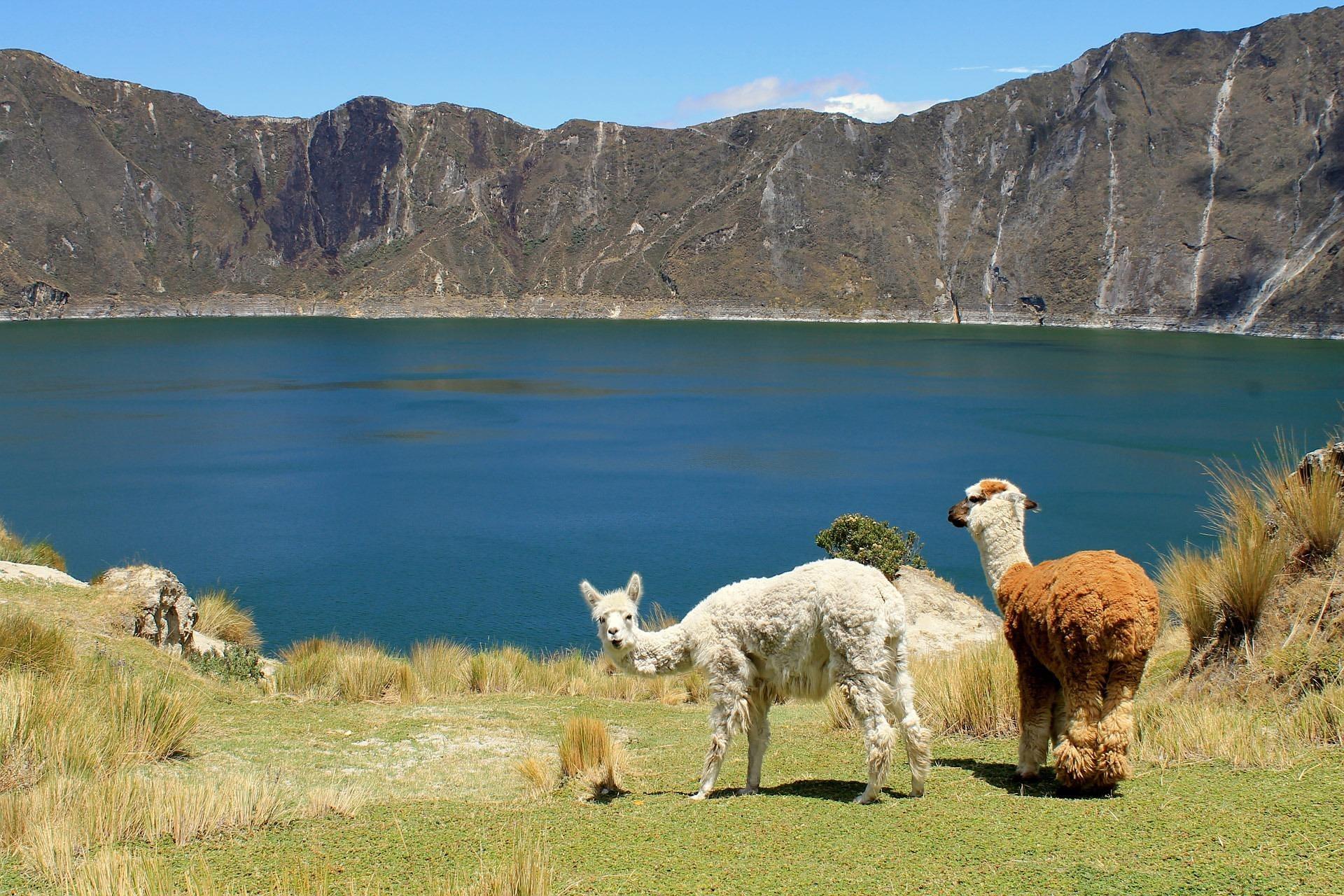
Explore Ecuador's iconic snow-capped volcano, meet alpacas, and hike around a pristine Andean lagoon

4.6 (114)
FromFrom $60
See details
Cotopaxi Volcano & Horseback Riding Day Trip from Quito 8 hours Free Cancellation

Cotopaxi Volcano & Horseback Riding Day Trip from Quito

Ride through Andean highlands on horseback and explore Ecuador's stunning Cotopaxi National Park

4.8 (11)
FromFrom €179.91
See details
Private Cotopaxi Horseback Adventure from Quito 9 hours Free Cancellation

Private Cotopaxi Horseback Adventure from Quito

Journey through Andean landscapes on horseback, explore ancient Inca ruins, and witness volcano views

5 (2)
FromFrom €142.03
See details
Cotopaxi & Quilotoa Volcanic Lagoons Day Trip 10 hours Free Cancellation

Cotopaxi & Quilotoa Volcanic Lagoons Day Trip

Discover two stunning Andean volcanic wonders in one unforgettable day from Quito

5 (3)
FromFrom €175.6
See details
Cotopaxi Volcano Horseback Riding Adventure from Quito 8 - 10 hours Free Cancellation

Cotopaxi Volcano Horseback Riding Adventure from Quito

Ride through volcanic highlands, explore Andean paramo trails, and discover pristine lagoons on this full-day equestrian journey.

5 (1)
FromFrom €189.37
See details
Cotopaxi Volcano & Limpiopungo Lagoon Adventure 6 hours Free Cancellation

Cotopaxi Volcano & Limpiopungo Lagoon Adventure

Scale Ecuador's iconic active volcano to 4,864m and explore a high-altitude lagoon teeming with birdlife

5 (2)
FromFrom $60
See details
Cotopaxi Horseback Adventure with Andean Hacienda Experience 9 hours Free Cancellation

Cotopaxi Horseback Adventure with Andean Hacienda Experience

Ride through volcanic landscapes and indigenous villages on a full-day equestrian journey from Quito

FromFrom $299
See details
What you'll see

What you'll see at Cotopaxi National Park Horseback Riding

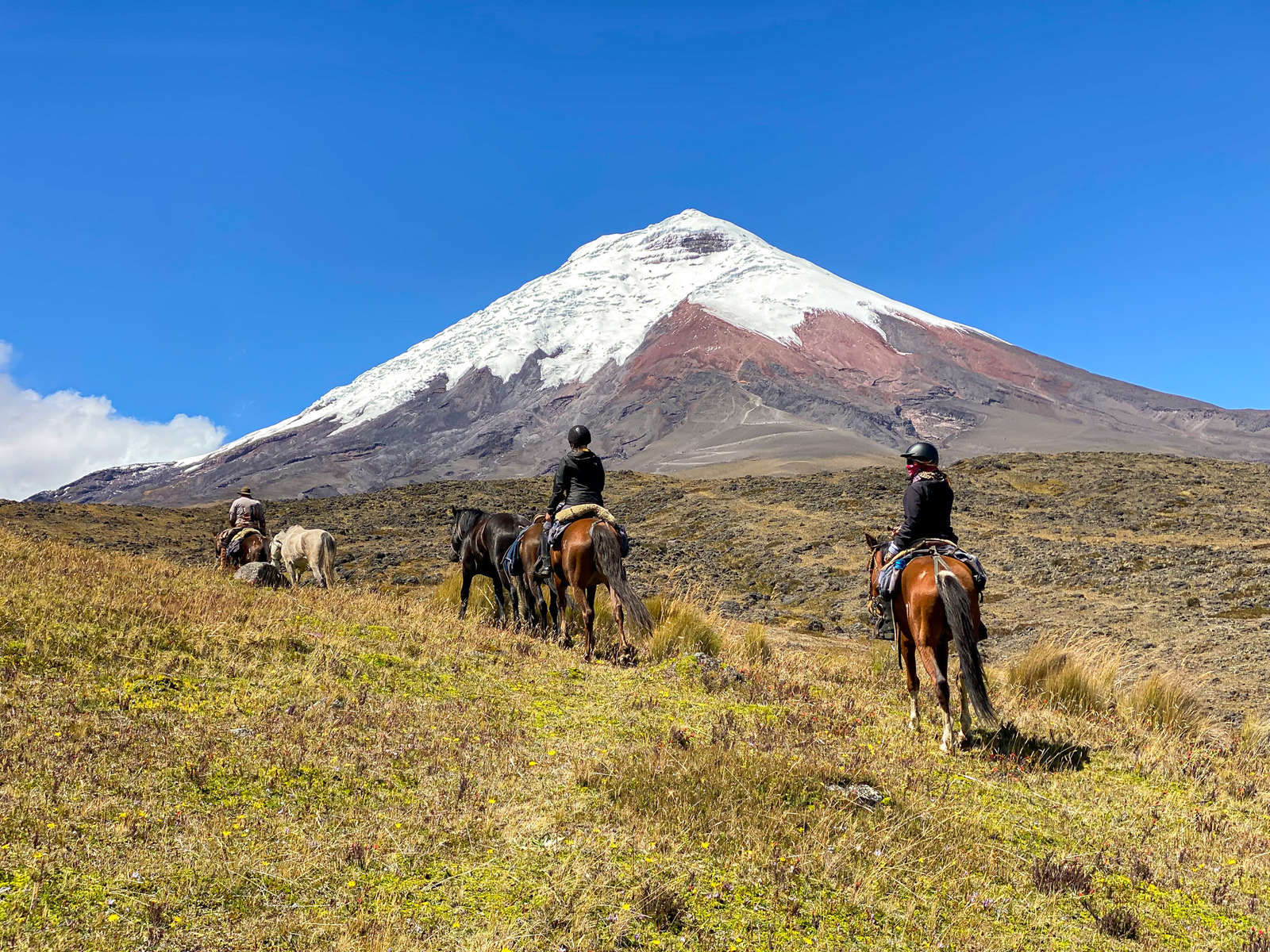
Cotopaxi Volcano

Cotopaxi Volcano

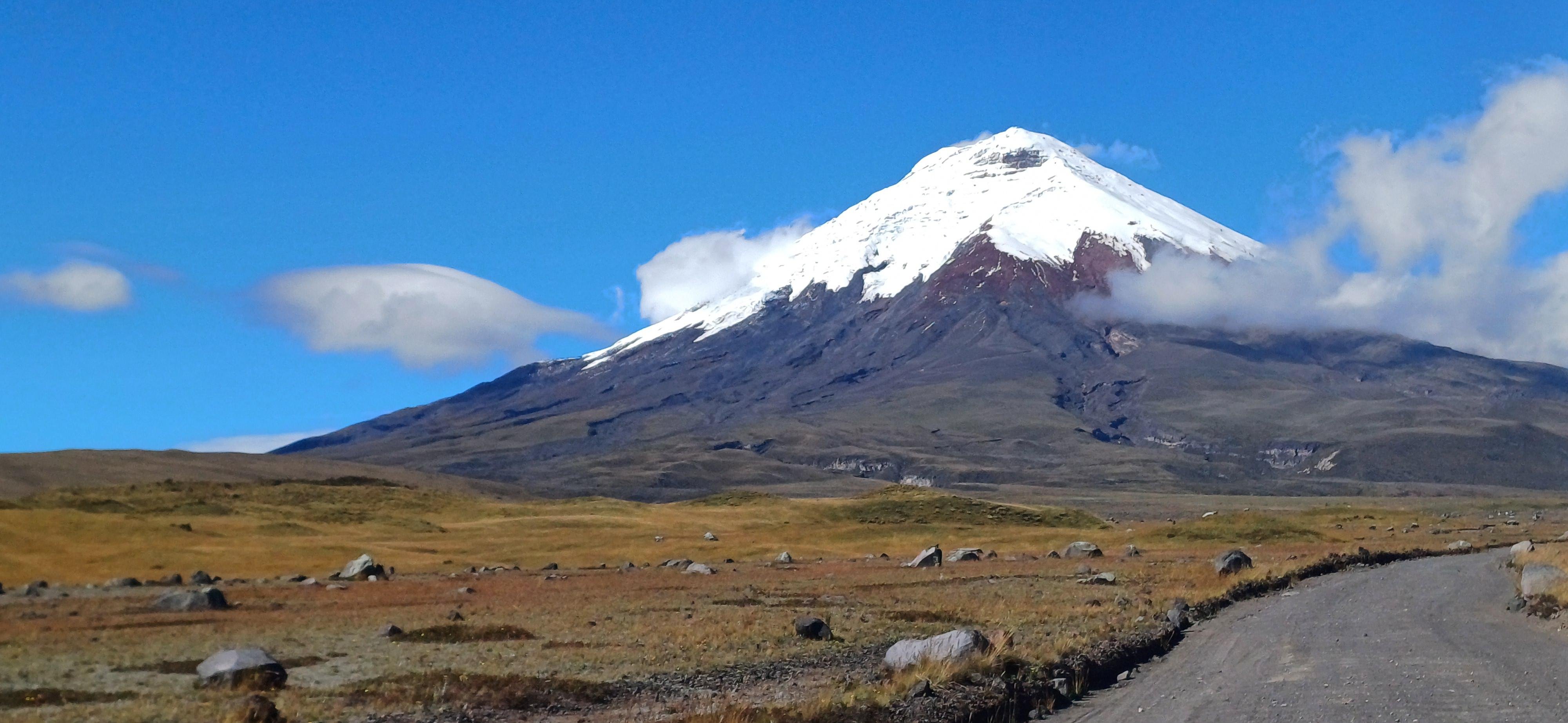
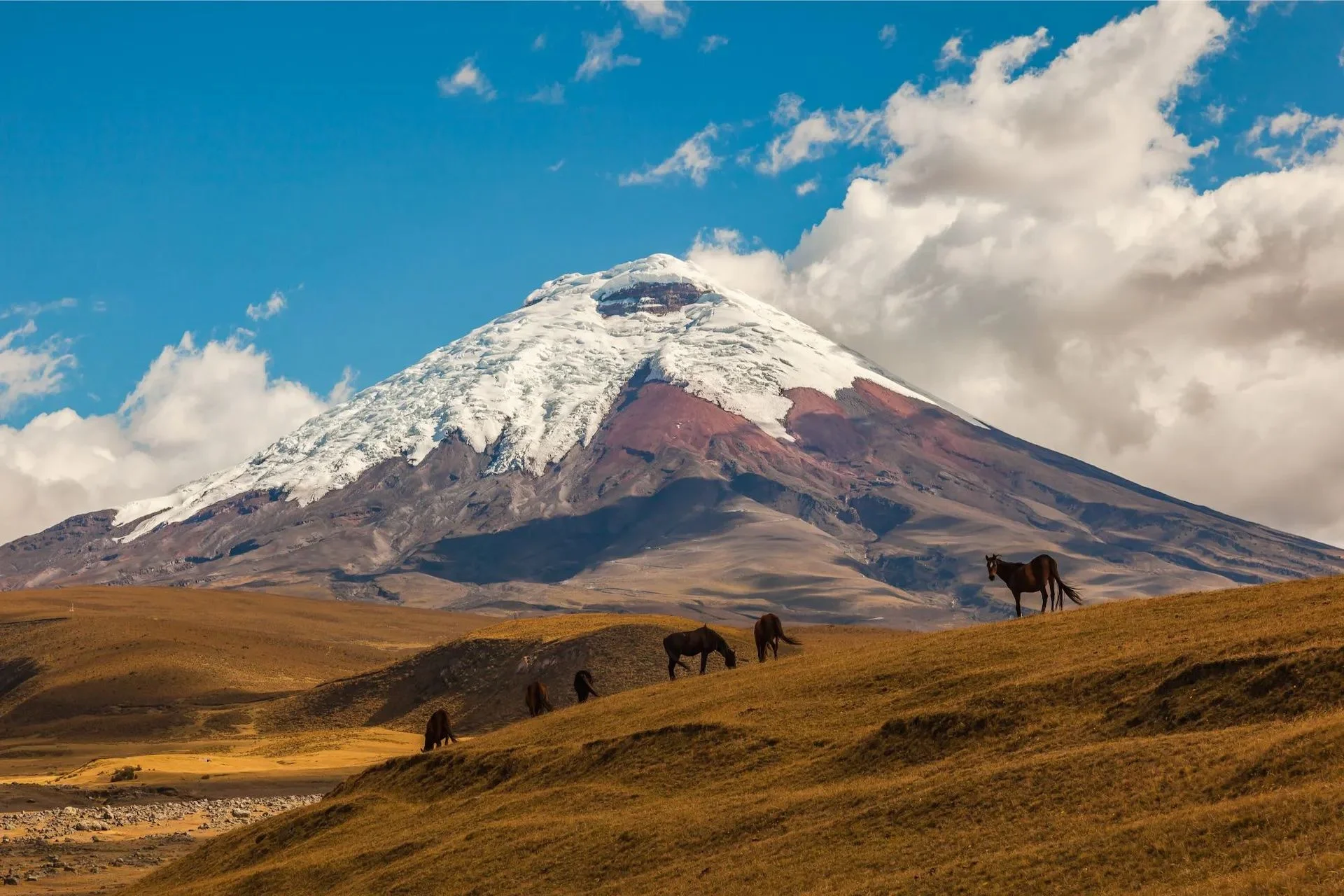
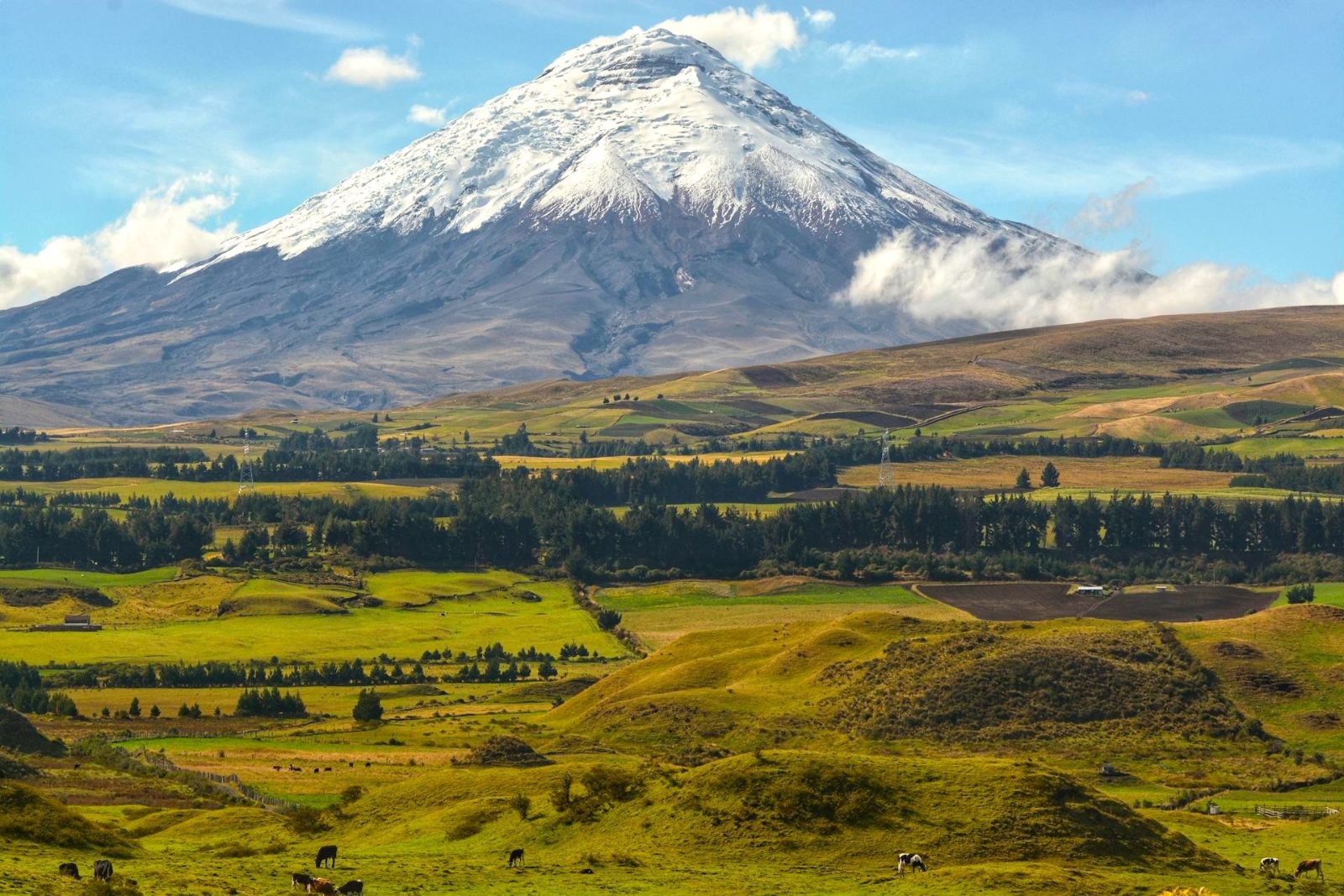
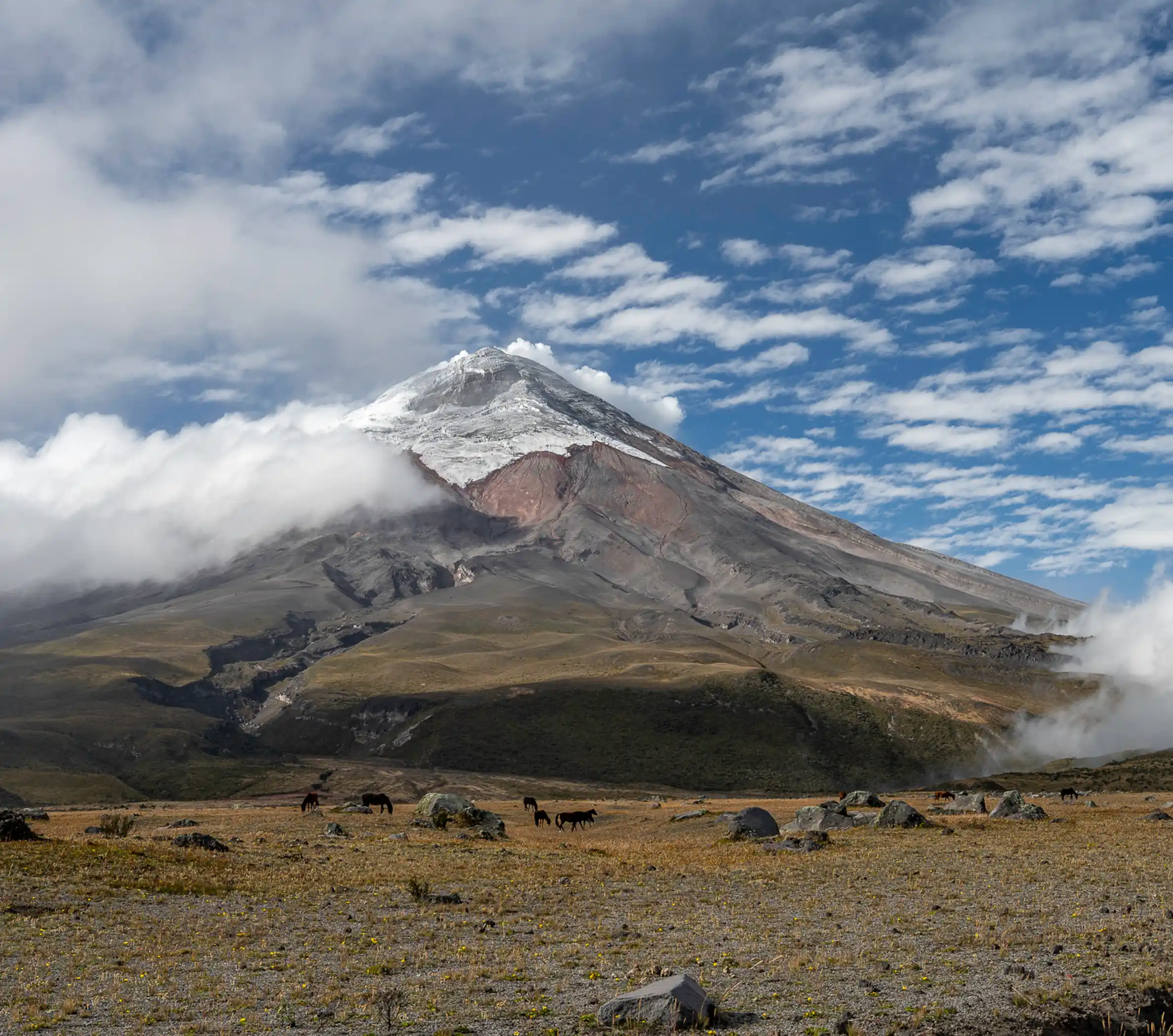
Active stratovolcano known for its nearly symmetrical snow-capped cone at 5,897 meters.

Limpiopungo Lagoon

Limpiopungo Lagoon

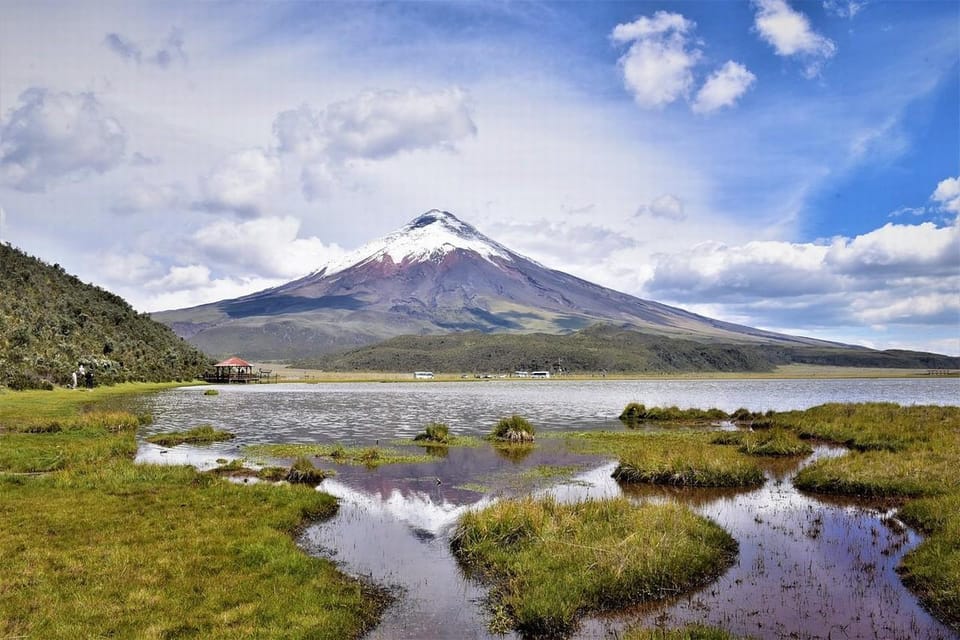
Shallow, scenic lake at 3,800 meters offering excellent reflections of the surrounding peaks.

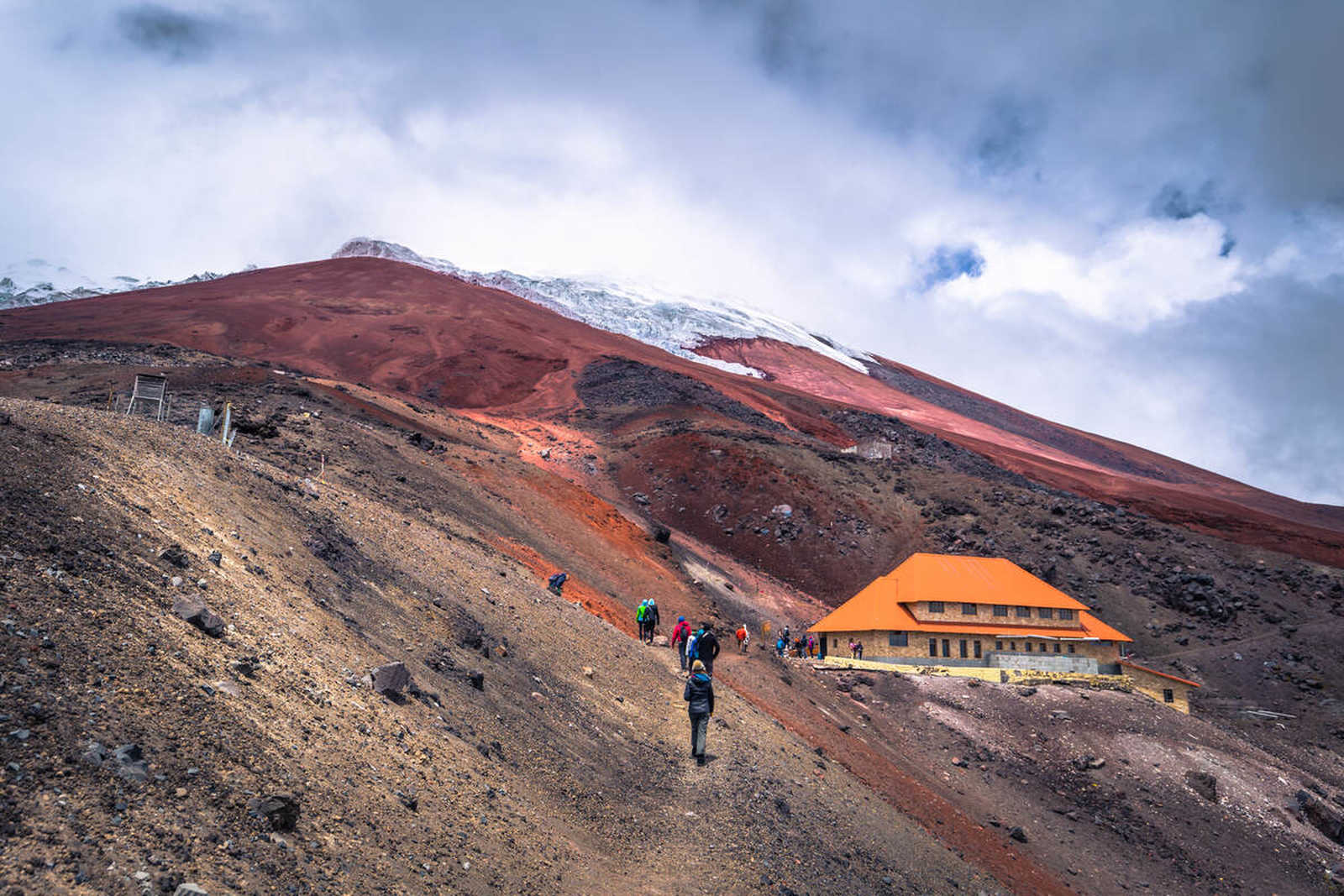
José Ribas Refuge

José Ribas Refuge

High-altitude mountain hut serving as a stop for climbers on the northern slope.

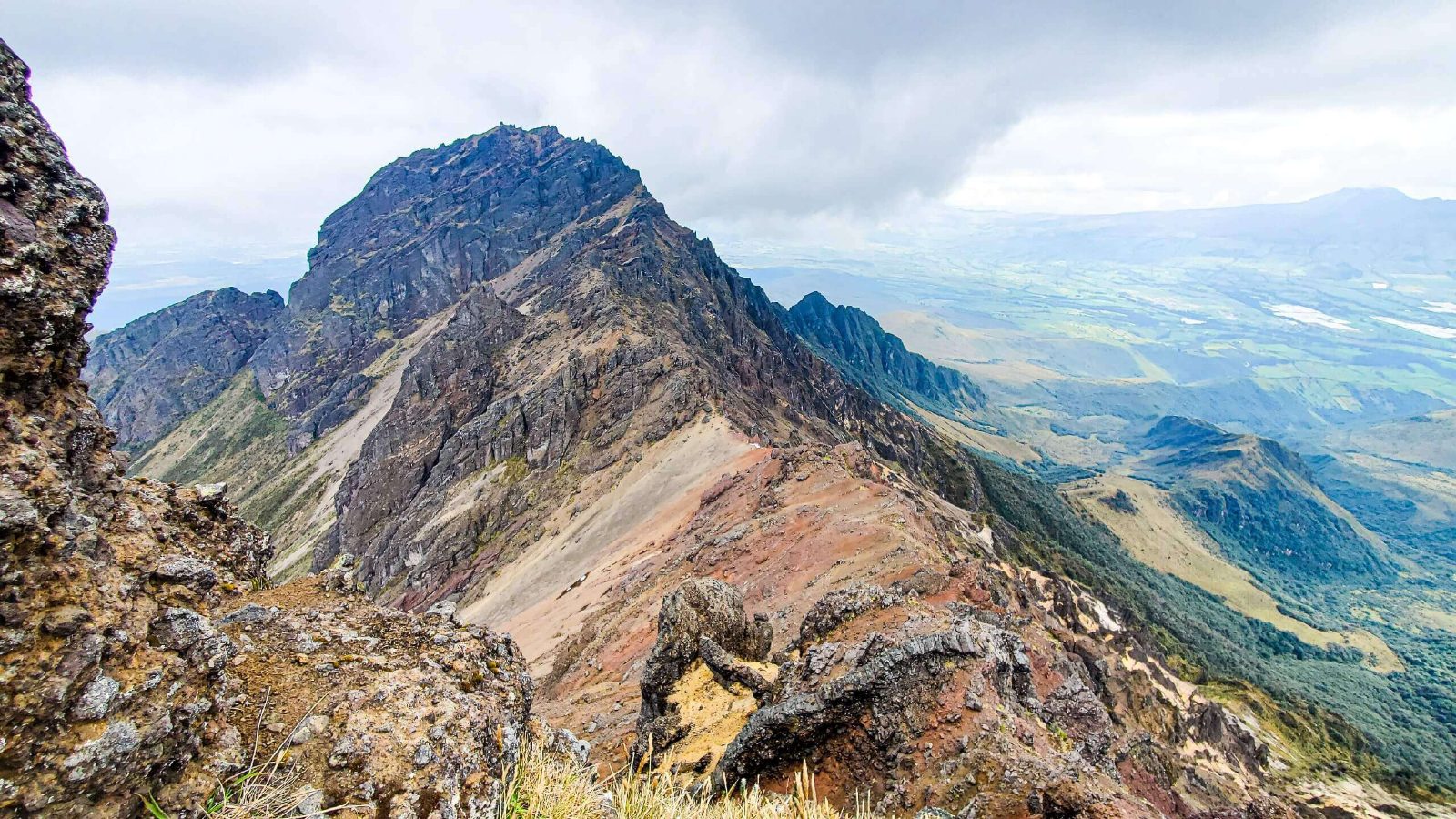
Rumiñahui Volcano

Rumiñahui Volcano

Rugged peak offering dramatic ridge views and ancient wild horse tracks.

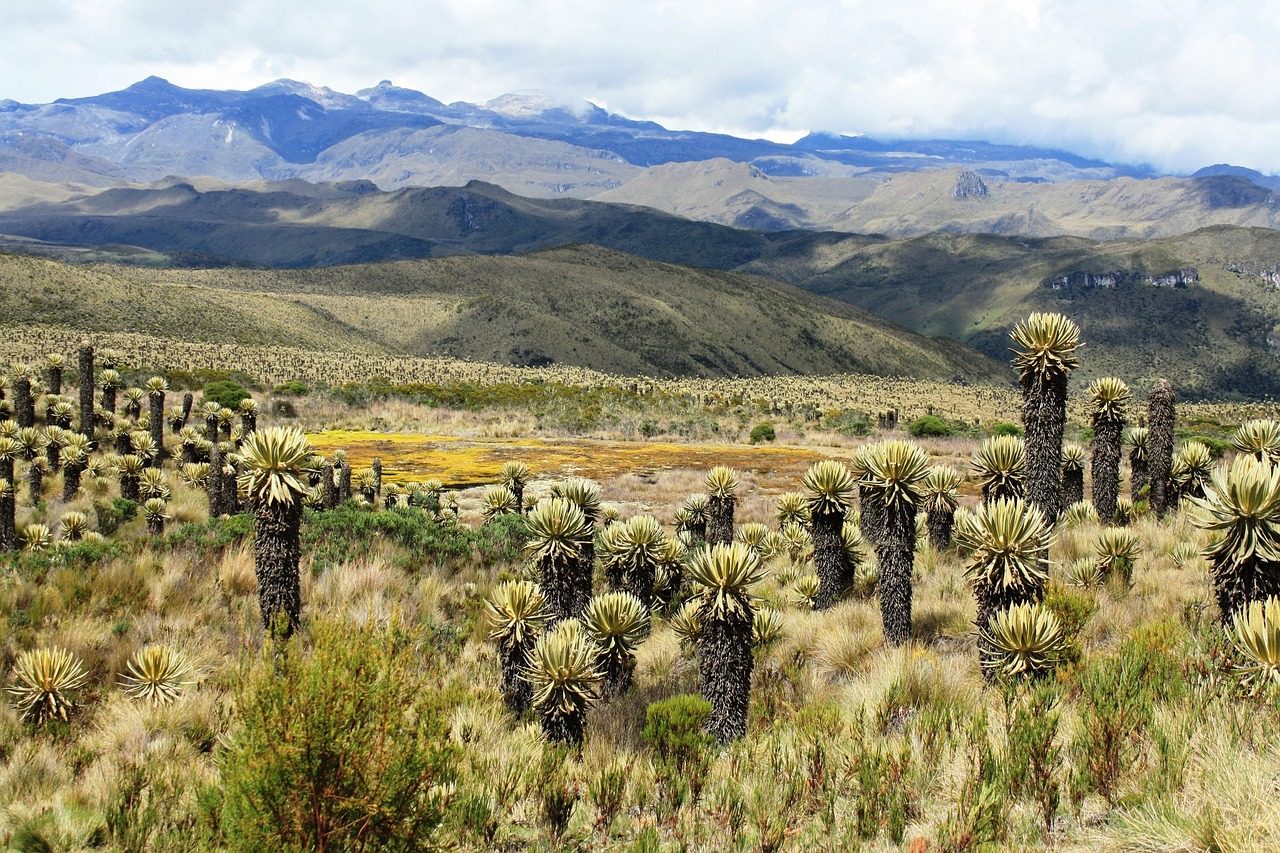
Páramo Ecosystem

Páramo Ecosystem

Unique, sponge-like high-Andean grassland vital for water conservation.

The experience

What visiting Cotopaxi National Park Horseback Riding is really like

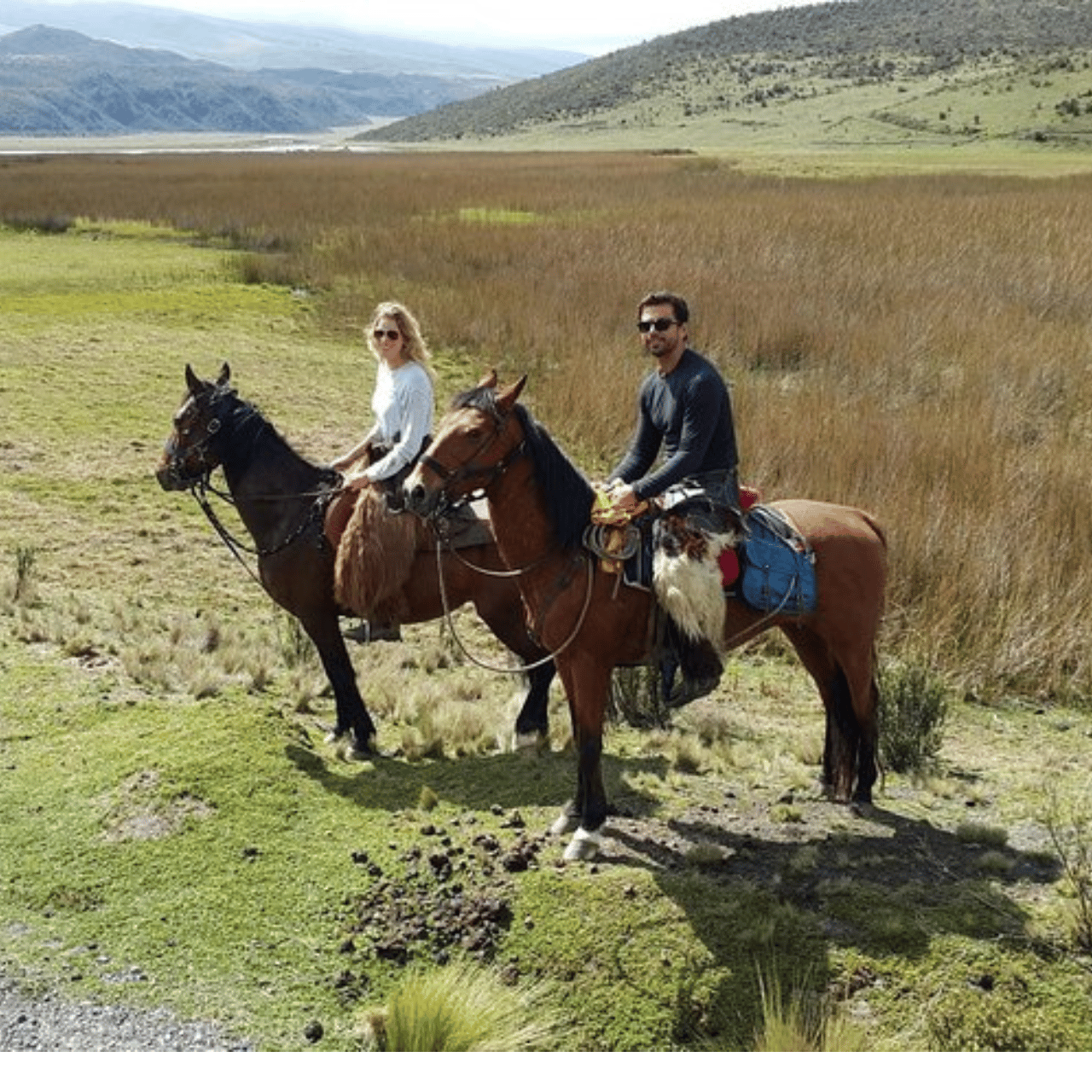
You arrive at the park entrance as morning light strikes Cotopaxi's glaciers, turning ice fields amber. After registration, your guide leads you to a hacienda corral where criollo horses—compact, sure-footed breeds adapted to thin air—wait saddled.

Read more Show less

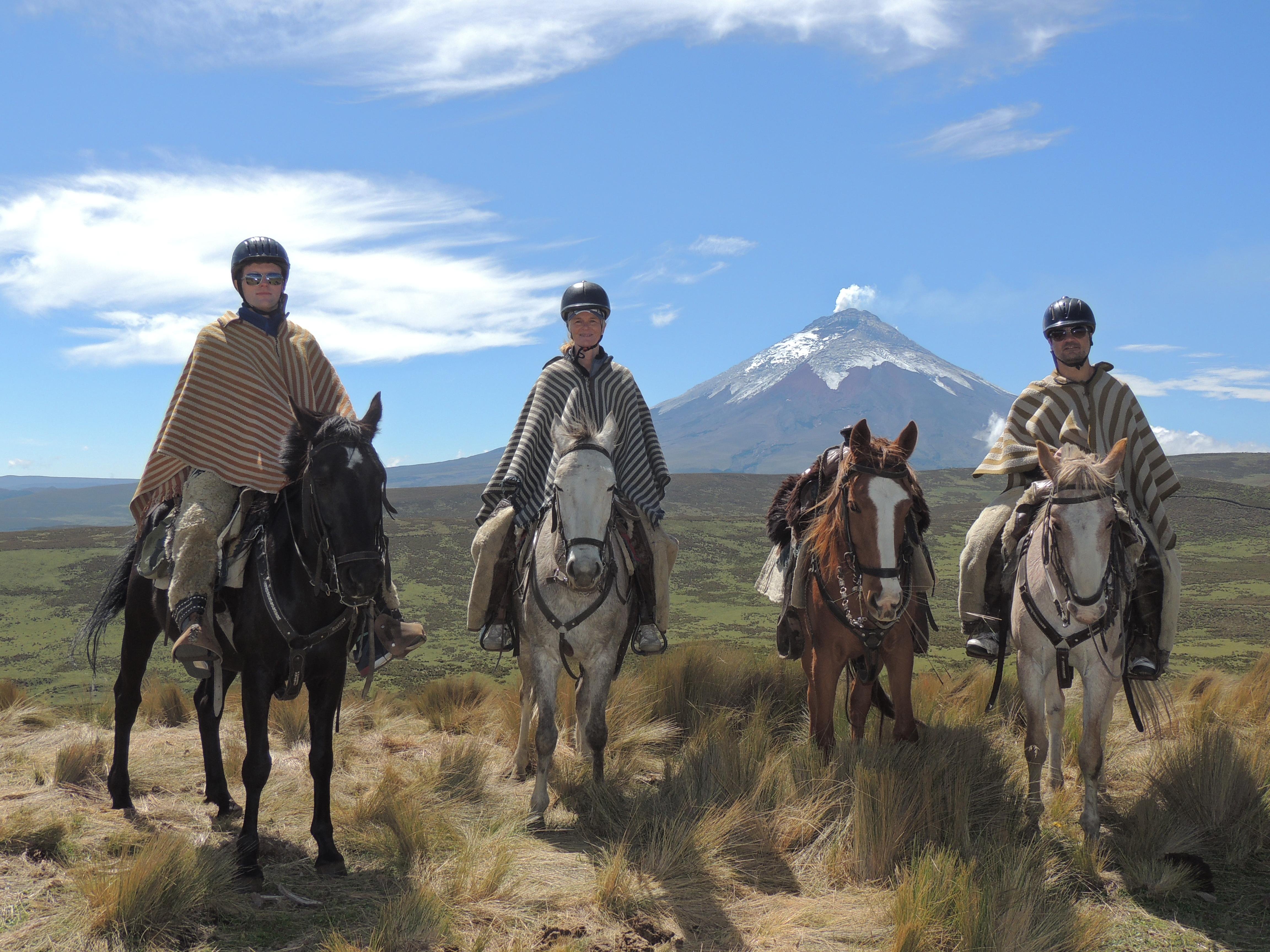
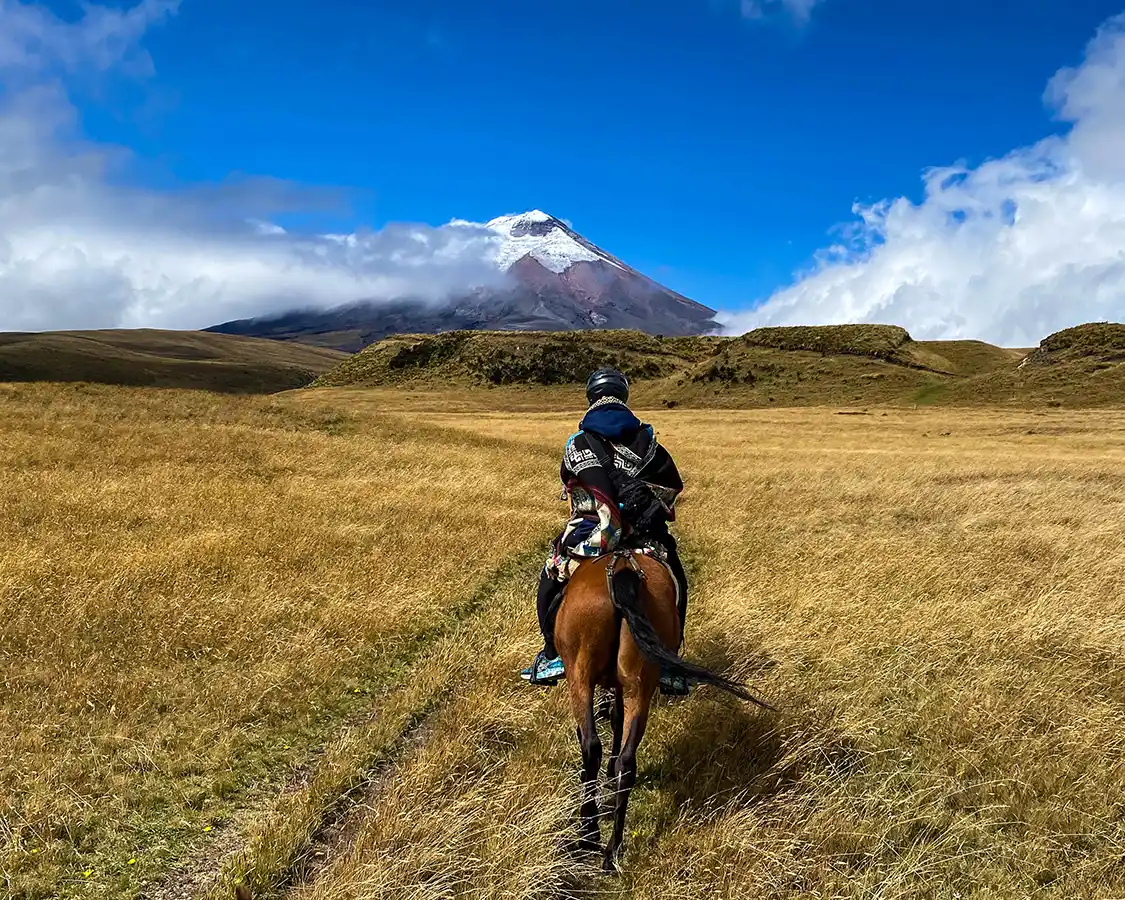
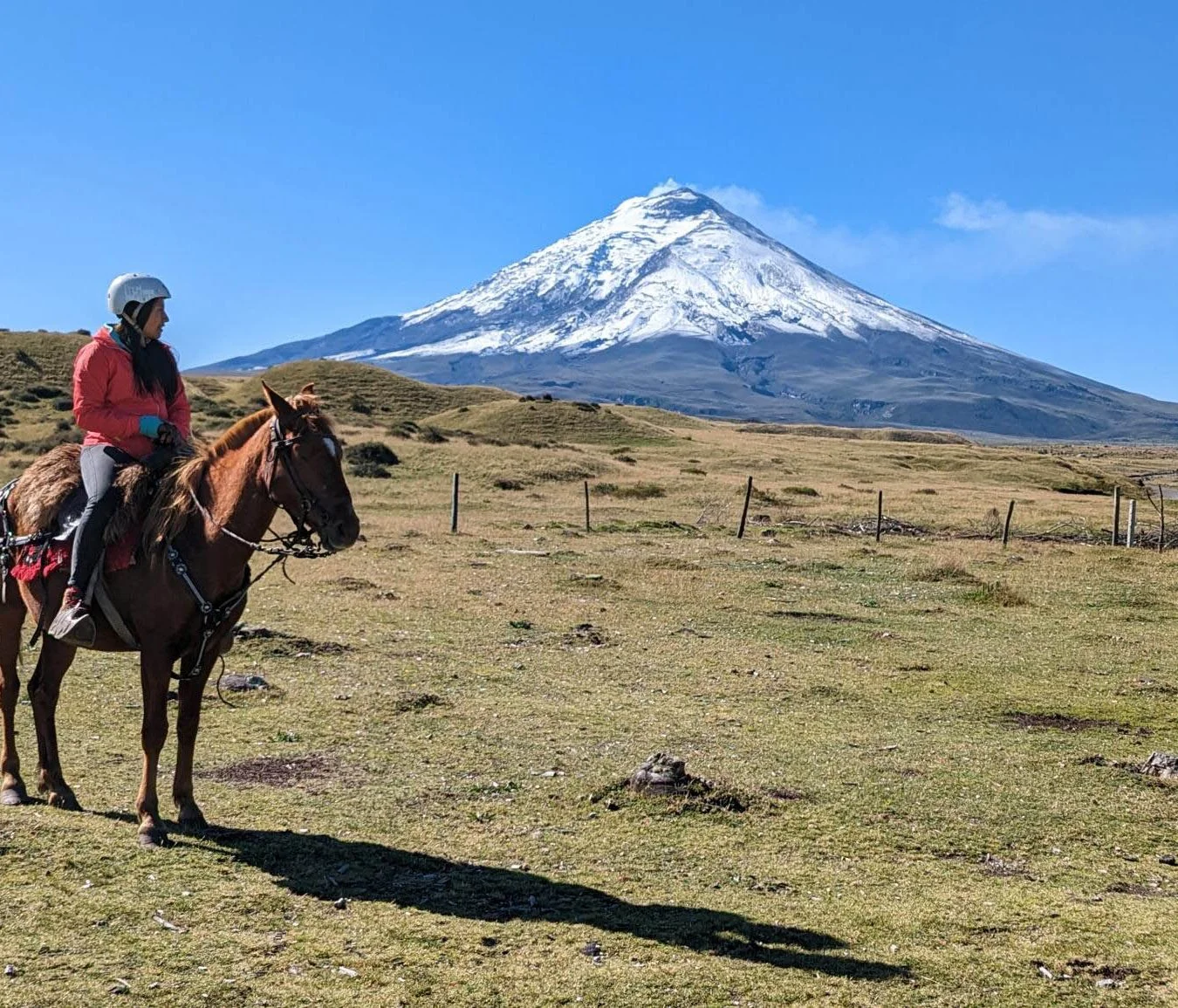
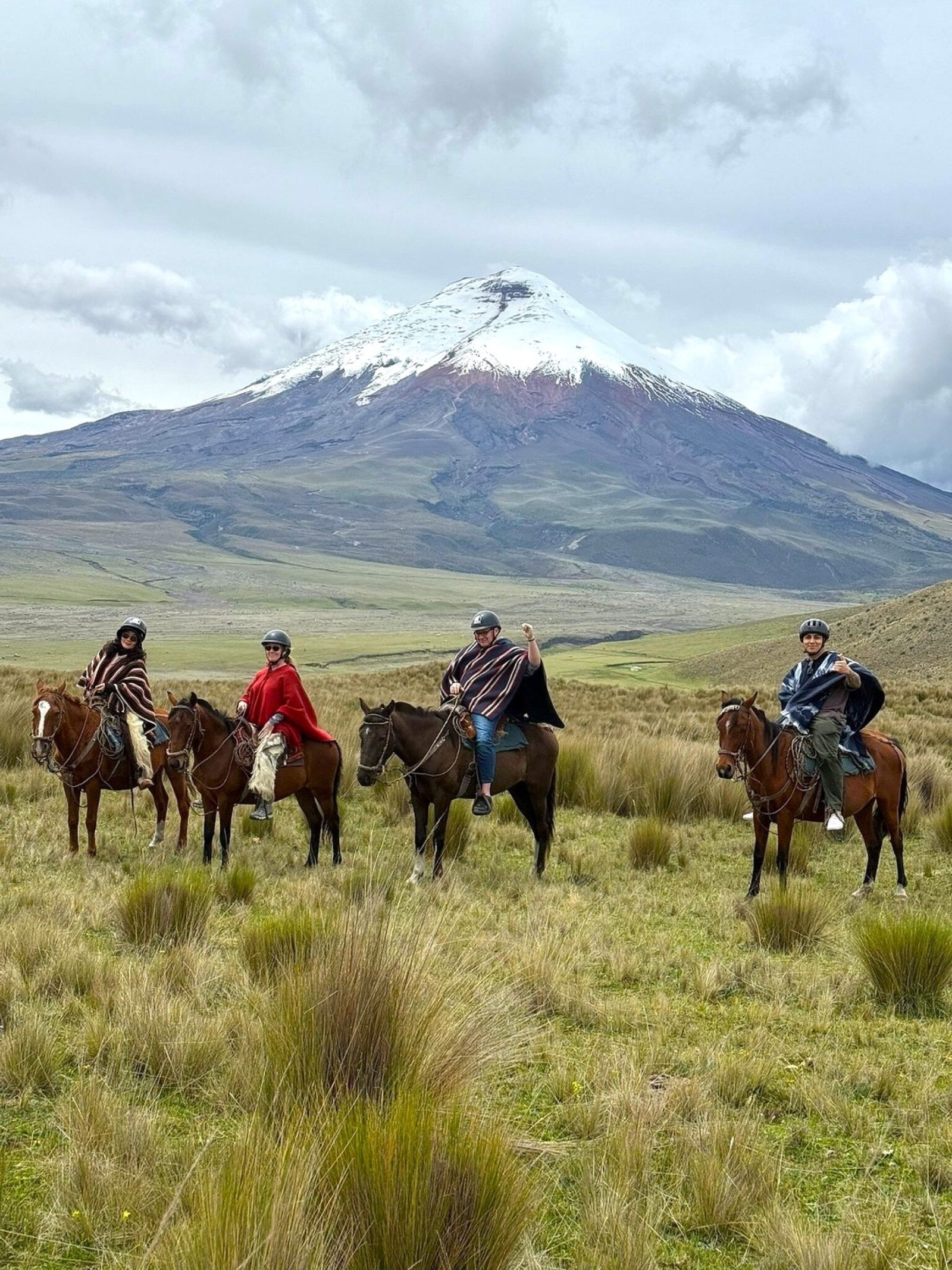
You mount and follow the trail north, hoofbeats muffled by volcanic sand, the volcano filling your left-side view.

The first kilometer crosses open páramo where tussock grass bends in the wind and the air smells of dust and resin. Your horse settles into a steady walk, unbothered by the 3,800-meter elevation that leaves you breathing harder. Ahead, Limpiopungo Lagoon reflects the summit's cone, and your guide pauses to point out tracks—wild horses, maybe a fox. You dismount briefly to photograph the symmetry, then continue.

The trail climbs gently toward the José Rivas Refuge access road, passing rock formations streaked with orange lichen. Your guide explains the terrain: this ash is from the 1877 eruption, that ravine drains glacial melt. At a stone corral, you stop to rest the horses. The wind carries no sound but its own movement. You scan the ridgeline for condors—sometimes they soar here at midday—but see only clouds gathering over the summit. The ride back descends through páramo where the volcano's north face dominates the horizon, its presence undiminished by familiarity. You return to the corral as afternoon fog begins to obscure the peak, the timing deliberate.

Cotopaxi National Park Horseback Riding
Everything You Need to Know

Your complete Cotopaxi National Park Horseback Riding guide

All the details about your upcoming adventure in one place

Cotopaxi's symmetrical cone rises 5,897 meters above the Ecuadorian Andes, its snow-crowned peak visible from Quito on clear mornings. The volcano last erupted in 2015, sending ash plumes across Latacunga and reminding visitors that this stratovolcano remains one of South America's most active.

The national park surrounding it, established in 1975, protects 33,393 hectares of high-altitude ecosystems where Andean condors circle above tussock grasslands and wild horses descended from colonial-era Spanish stock still roam the páramo.

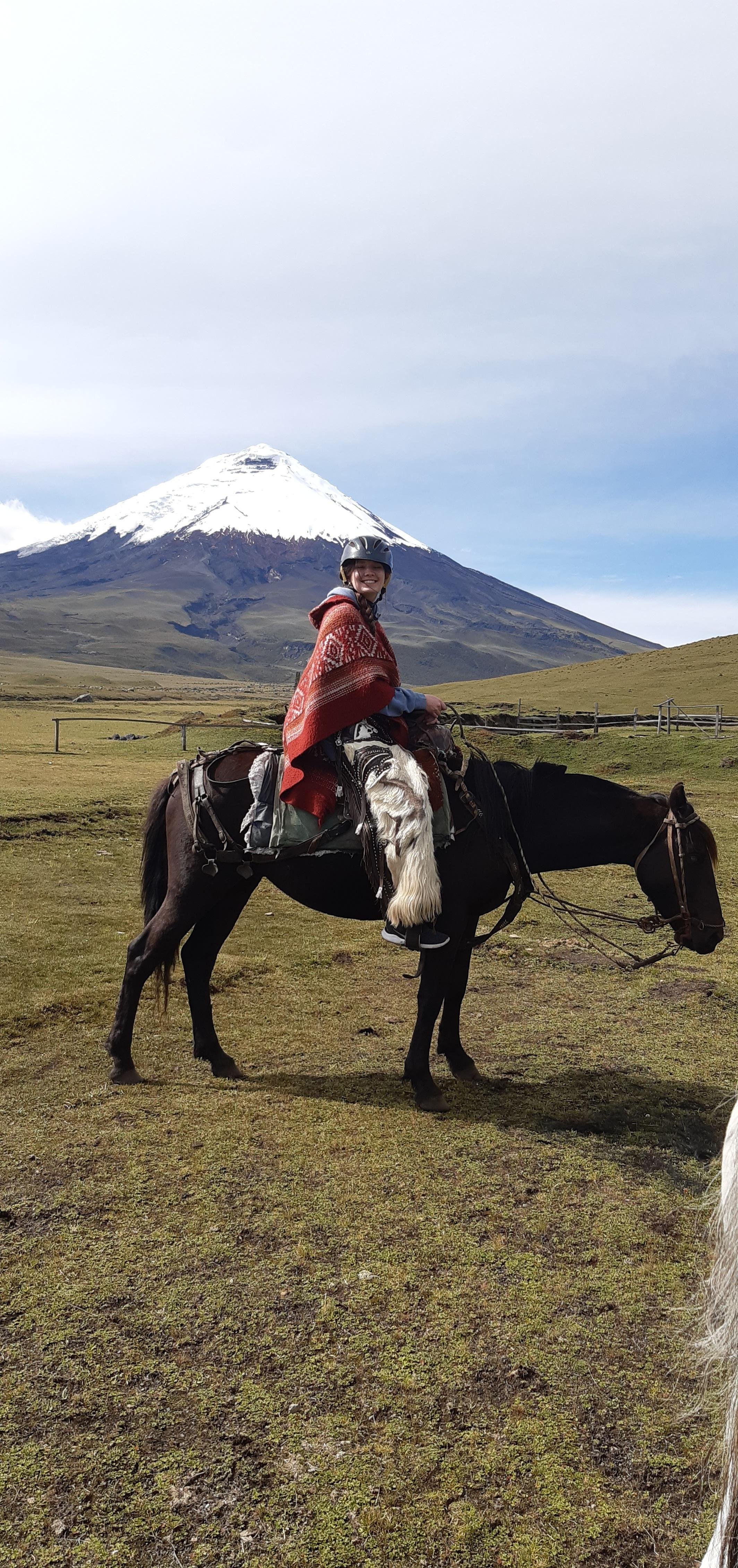
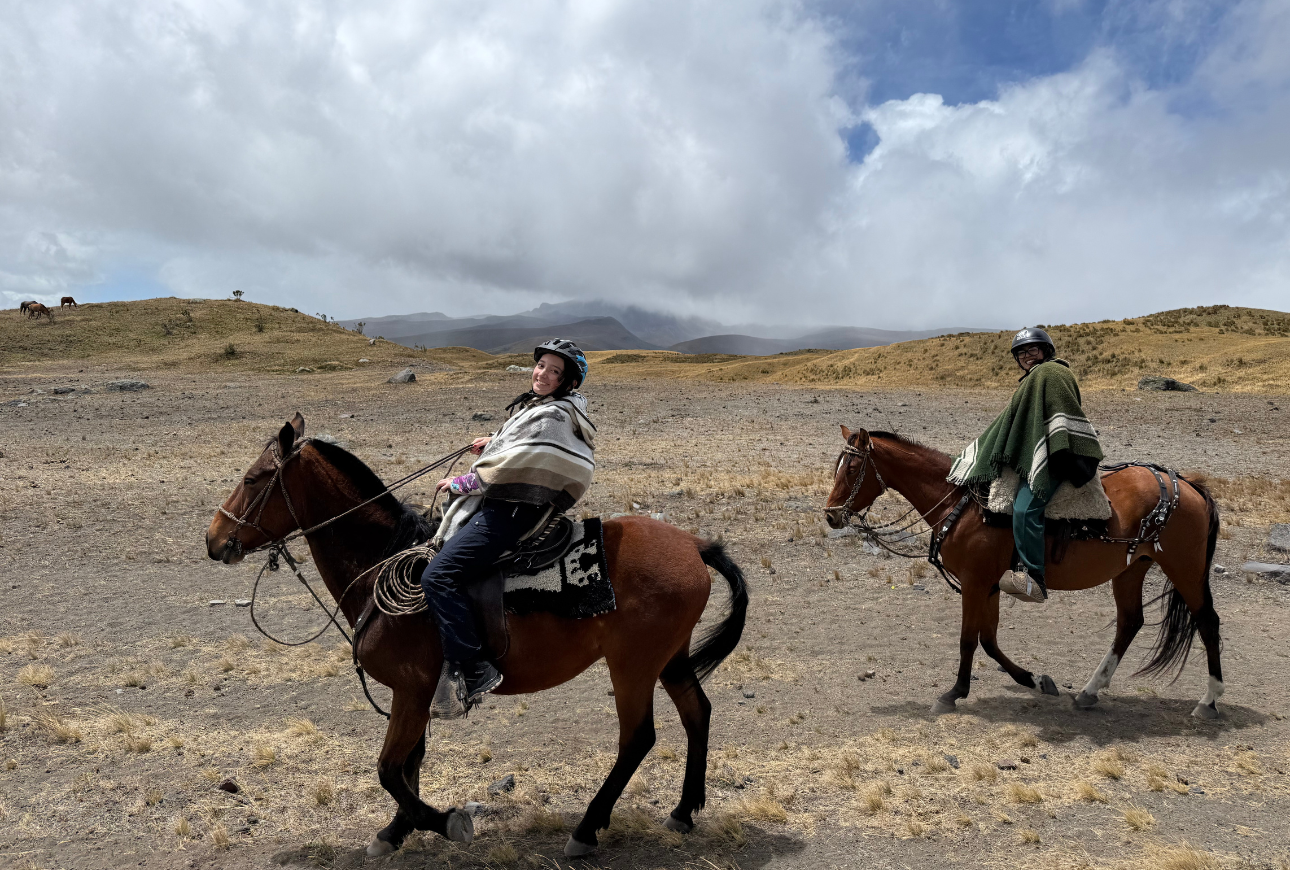
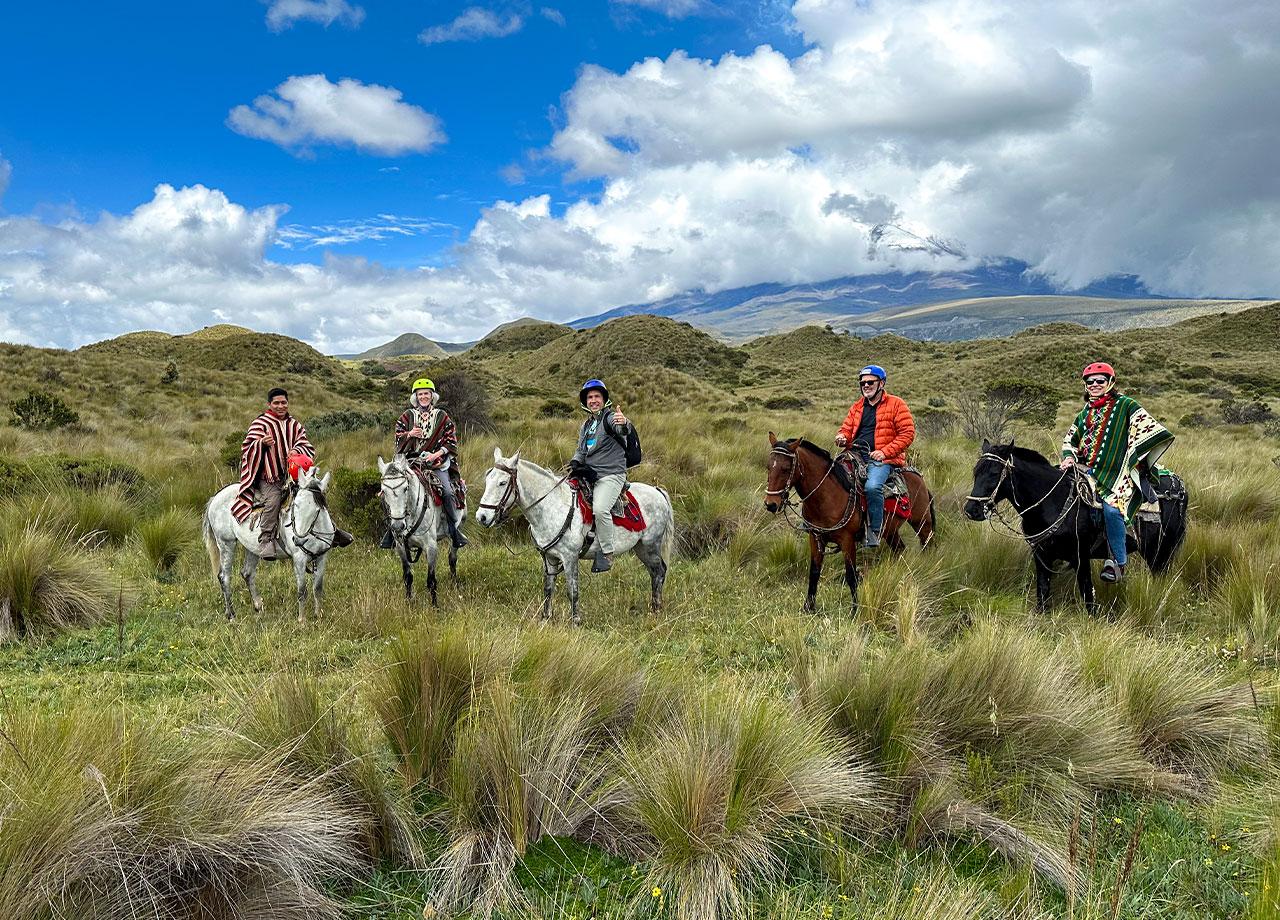
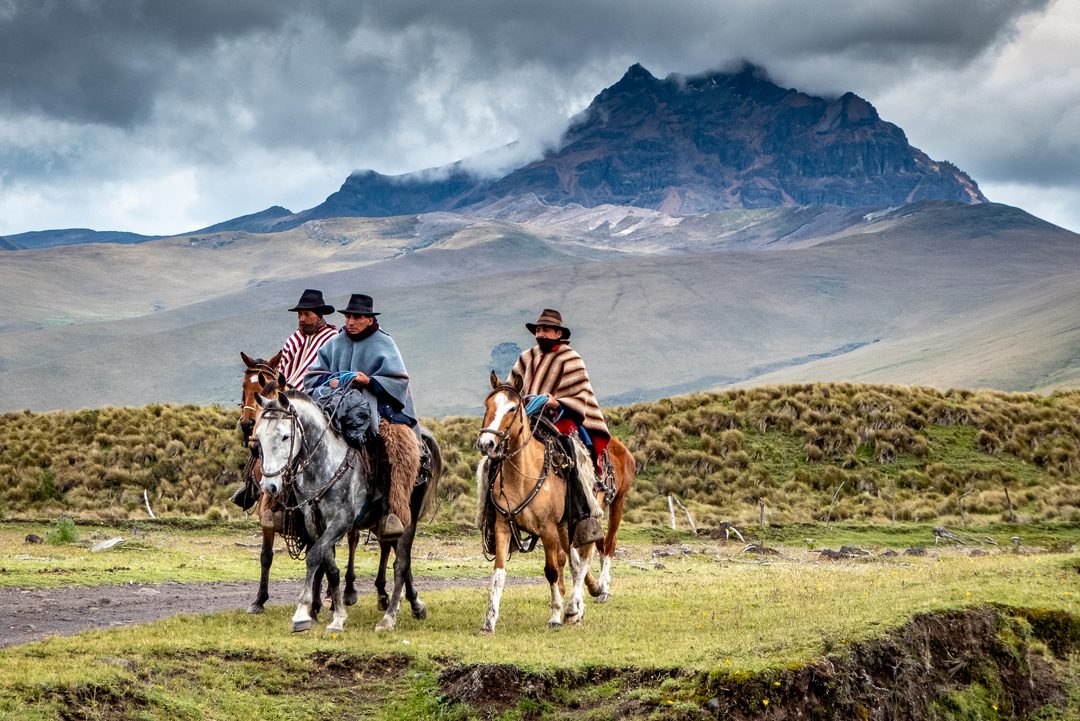
Cotopaxi National Park horseback riding has connected travelers to this volcanic landscape since the 1990s, when haciendas bordering the park began offering guided trail rides across the plateau. Rides typically begin at 3,800 meters elevation near Limpiopungo Lagoon, where altitude thins the air and the horizon opens to unobstructed views of the volcano's north face. The trails follow ancient footpaths used by arrieros—muleteers who once transported goods between highland communities—and cross terrain where Inca roads once linked Quito to Cusco. Horses bred for high-altitude work navigate the volcanic sand and ash with steady footing, their stamina shaped by generations of páramo life.

The park's ecosystem shifts dramatically with elevation. Below 4,000 meters, the páramo supports cushion plants, Chuquiraga shrubs, and patches of Polylepis forest—twisted queñoa trees that cling to ravines. Above that threshold, vegetation thins to lichen and moss, and the ground turns to black volcanic gravel left by Cotopaxi's eruptions. Guided horseback tours traverse both zones, allowing riders to observe the transition from grassland to alpine desert without the physical demands of summit attempts on foot. The rides pass stone corrals where park rangers once sheltered livestock and cross streams fed by glacial melt that originates 2,000 meters higher on the volcano's flanks. On horseback, the scale of the landscape becomes legible—the plateau's vastness, the volcano's gradient, the way light shifts across ash fields as clouds pass overhead.

Cotopaxi's trails also hold geological memory. Layers of pumice and lapilli exposed in eroded banks record eruptions from the past 4,000 years, each stratum a chapter in the volcano's chronology. The 1877 eruption destroyed haciendas in the Latacunga valley and sent lahars—volcanic mudflows—down the Cutuchi River, reshaping the terrain riders now cross. Today's trails avoid the zones most vulnerable to future lahars, but the risk remains part of the park's identity, a reminder that beauty here is inseparable from volatility.

Horses bred for high-altitude work navigate the volcanic sand and ash with steady footing, their stamina shaped by generations of páramo life.

Dress code

Wear warm, layered clothing suitable for high-altitude Andean weather, including a windproof jacket. Sturdy, closed-toe boots are required for all cotopaxi national park horseback riding excursions.

Bags & security

Keep all personal documents and your passport accessible for the mandatory registration at the park gate. Small daypacks are appropriate for carrying water and extra layers during your cotopaxi national park horseback riding tour.

Photography

Capture the landscape responsibly, keeping a safe distance from wildlife. Professional drone photography often requires prior permit authorization within Cotopaxi National Park.

Families & strollers

Horseback riding is suitable for older children and teenagers comfortable with animals. Always verify minimum age requirements directly with your tour provider.

Accessibility

The terrain is rugged, high-altitude, and unpaved, which may present challenges for visitors with mobility issues. Ensure your selected cotopaxi national park horseback riding operator is aware of any specific needs.

Food & drink

Bring sufficient water and high-energy snacks as options inside the park are limited. Leave no trace and ensure all waste is packed out after your ride.

Not allowed

× Firearms × Drones without permit × Alcohol × Single-use plastics × Illegal drugs × Loudspeakers × Off-road motor vehicles × Fire-starting equipment

What to bring

✓ Passport ✓ Sunscreen ✓ Sunglasses ✓ Water ✓ Lip balm ✓ Camera ✓ Gloves

Opening hours

Mon 08:00–15:00
Tue 08:00–15:00
Wed 08:00–15:00
Thu 08:00–15:00
Fri 08:00–15:00
Sat 08:00–15:00
Sun 08:00–15:00

How to get there

At a glance

Opening hours

08:00–15:00

Address

Cotopaxi National Park, Cotopaxi Province, Ecuador

Registration

Mandatory with passport or ID at the gate

Best arrival window

08:00–10:00

Security

Carry identification at all times

Entrance fee

0 USD (Free entry)

Cancellation policy

Operators for cotopaxi national park horseback riding tours typically offer full refunds for cancellations made at least 48 hours in advance. Entrance to the park itself is free, so no park fees are forfeited.

Plan your time

Managing Your Cotopaxi National Park Horseback Riding Schedule

Recommended time

4-6 hours

To experience cotopaxi national park horseback riding, plan for a morning arrival to secure your registration at the gate. Selecting a cotopaxi national park horseback riding tour during the recommended window allows you to traverse the Andean paramo before cloud cover obscures the volcano summit. Most cotopaxi national park horseback riding tours require additional time for gear fitting and safety briefings, so arrive early to ensure a full experience.

Crowd levels through the day

08:00–09:30 Light
09:30–11:00 Moderate
11:00–13:00 Peak
13:00–15:00 Moderate
The story

The history of Cotopaxi National Park Horseback Riding

Cotopaxi National Park was established on August 11, 1975, protecting 33,393 hectares of páramo and volcanic terrain around one of the world's highest active volcanoes. The park's creation followed decades of informal grazing and subsistence farming by highland communities who had used these slopes since pre-Columbian times. Indigenous groups traversed the volcanic highlands on foot and horseback long before colonial settlement, relying on local knowledge to navigate the thin air and unpredictable weather. Spanish chroniclers documented expeditions to Cotopaxi as early as the 1740s, though the volcano's frequent eruptions deterred permanent habitation. The park's founding aimed to halt agricultural expansion and preserve fragile alpine ecosystems, but it also restricted traditional land use by campesinos who had grazed livestock on the lower flanks for generations. By the 1980s, Ecuador's Ministry of Environment recognized that controlled horseback access could balance conservation with cultural heritage. Local haciendas and indigenous cooperatives began offering guided cotopaxi national park horseback riding excursions, replacing informal trails with designated routes that minimized erosion. The 1996 eruption of Cotopaxi forced a temporary closure, suspending all mounted tours for eight months while volcanologists assessed the crater's stability. When the park reopened in 1997, new zoning restricted horses to the northern and western sectors below 4,200 meters, protecting sensitive moss beds and nesting sites for Andean gulls. Commercial cotopaxi national park horseback riding tours expanded rapidly after 2000, as eco-lodges in Lasso and Machachi formalized partnerships with Quechua horsemen who knew the safest ridgelines and water sources. The 2015 eruption cycle again closed the park for four months, prompting stricter enforcement of trail permits and group size limits. Since reopening, cotopaxi national park horseback riding has adhered to a rotational grazing calendar that rests high-altitude pastures during the rainy season. The park's equestrian trails now form part of Ecuador's recognized heritage tourism corridor, blending volcanic geology with highland ranching traditions that predate the park itself.

Pre-1534

Indigenous communities traverse Cotopaxi's slopes on foot and horseback, using high-altitude trails for trade and seasonal grazing.

1742

French geographer La Condamine documents early attempts to approach Cotopaxi's summit, noting local guides' reliance on mules.

1975

Cotopaxi National Park is established on August 11, protecting 33,393 hectares and restricting informal livestock grazing.

1980s

Ministry of Environment authorizes controlled horseback access, and local haciendas begin offering guided trail rides on designated routes.

1996

Volcanic eruption forces an eight-month park closure, halting all mounted tours while scientists monitor crater activity.

2000s

Commercial riding tours expand as eco-lodges partner with Quechua horsemen to develop safe, low-impact routes below 4,200 meters.

2015

Four-month closure following eruption cycle leads to stricter trail permits, group size limits, and rotational grazing schedules.

2020s

Equestrian trails gain recognition as part of Ecuador's heritage tourism corridor, blending geology with highland ranching traditions.

Photo spots

Top Viewpoints for Cotopaxi National Park Horseback Riding

Limpiopungo Lagoon Shore

Limpiopungo Lagoon Shore

Best light · Before 10:00

Position your horse along the water's edge to capture the reflection of the volcano in the lake. This spot offers a wide, expansive composition of the Andean landscape and is a highlight of any cotopaxi national park horseback riding tour.

Northern Volcanic Base

Northern Volcanic Base

Best light · Morning light

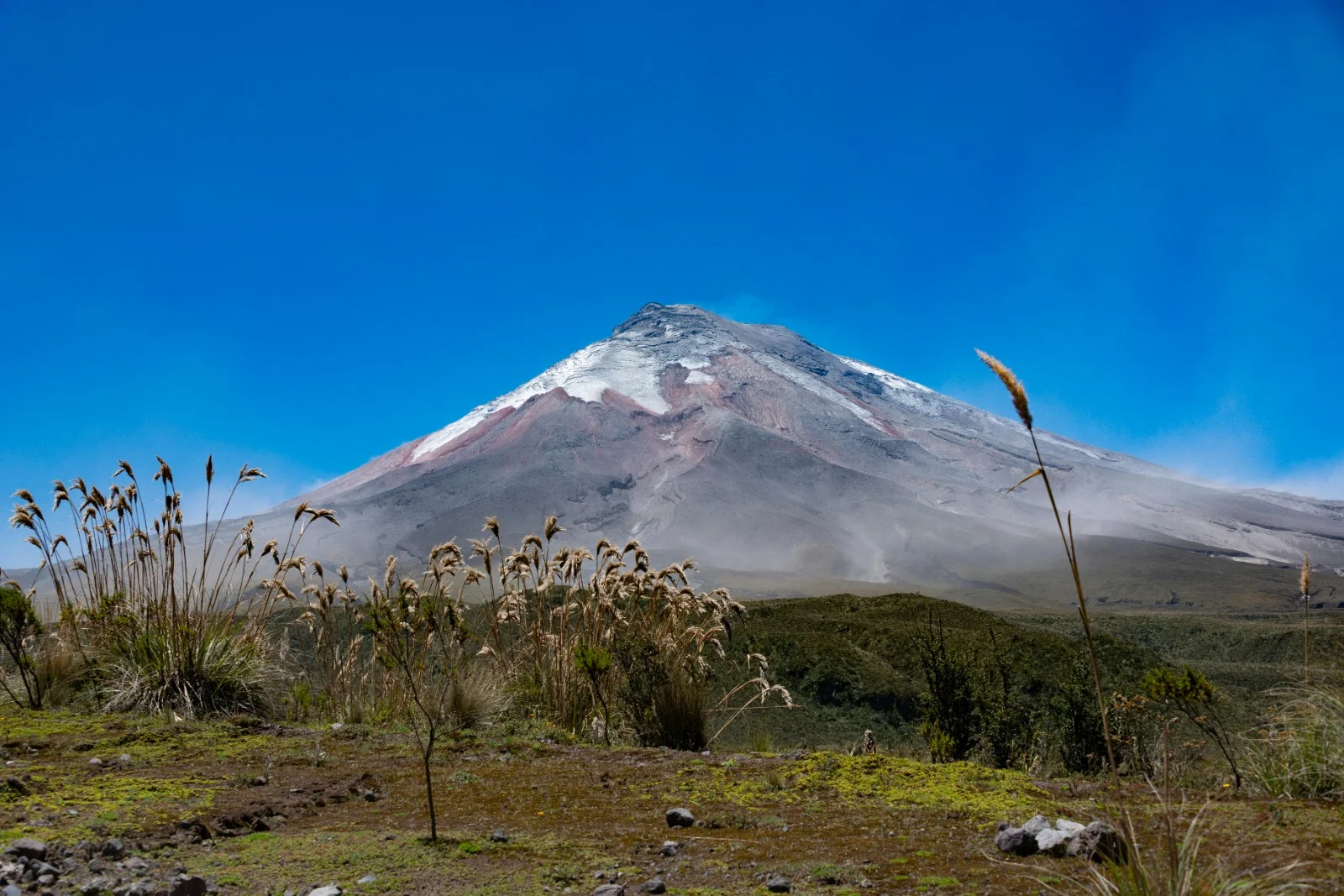
Ride toward the lower slopes where the rugged terrain meets the ash fields. Frame the towering glacier against the textured paramo grasses for a scale-focused shot, often included in cotopaxi national park horseback riding tours.

Paramo Grasslands Ridge

Paramo Grasslands Ridge

Best light · Golden hour

Seek out the high ridges that overlook the sweeping Andean plains. These vantage points provide a panoramic perspective of the massif, similar to what you might see when booking cotopaxi national park horseback riding tickets.

Gallery

Moments from Cotopaxi National Park Horseback Riding

With kids

Family Logistics for Cotopaxi National Park Horseback Riding

Exploring the Andean highlands via cotopaxi national park horseback riding is a memorable way for families to experience the landscape at a gentle pace. Since this high-altitude destination involves rugged terrain, careful planning ensures a comfortable outing for all ages.

High-Altitude Care

Young children may experience altitude sickness, so plan to arrive during the best arrival window of 08:00–10:00 to allow for gradual acclimatization. Ensure everyone stays hydrated and monitor energy levels closely throughout the excursion.

Selecting Horses

When booking cotopaxi national park horseback riding tours, request calm, experienced mounts specifically suited for young or beginner riders. Staff are generally skilled at matching temperament to the experience level of your family members.

Age Considerations

Most outfitters providing a cotopaxi national park horseback riding tour require children to be at least 6 to 8 years old to handle their own reins. Younger children may sometimes ride double with an adult, subject to individual operator safety assessments.

Equine Gear

Wear sturdy, closed-toe boots and layers of warm clothing, as temperatures near the volcano can drop rapidly. Proper helmets are standard equipment provided by reputable guides to keep children safe during the ride.

Booking Logistics

While entrance to the park is 0 USD, remember that cotopaxi national park horseback riding tickets for specific guided trails must be arranged through authorized local operators. Always confirm that your chosen tour includes the necessary gear and a safety briefing.

Food & drink

Where to Dine Near Cotopaxi National Park Horseback Riding Routes

Visitors planning a cotopaxi national park horseback riding excursion will find that dining options are primarily situated within historic haciendas located on the park's periphery. These lodges offer a convenient way to refuel after finishing your cotopaxi national park horseback riding tours.

Hacienda El Porvenir

$15-30

Lodge Restaurant

Located near the park entrance, this venue serves traditional Andean cuisine in a rustic setting. It is a preferred stop for those finishing a cotopaxi national park horseback riding tour.

FAQ

Cotopaxi National Park Horseback Riding — frequently asked questions

Everything you need to know for your journey

Ready for Adventure?

Join thousands of happy travelers who have discovered this incredible experience

Book Your Experience Now