
Quick answer
The standard Cotopaxi climb takes two days from Cotopaxi National Park base. Day one involves hiking to Refugio José Rivas at 4,864 meters and resting through the afternoon. Day two begins near midnight with a 6-8 hour ascent to the 5,897-meter summit, followed by a 3-4 hour descent back to the parking area. Total summit day effort averages 10-12 hours, though strong climbers with proper acclimatization occasionally complete it in 8-9 hours.
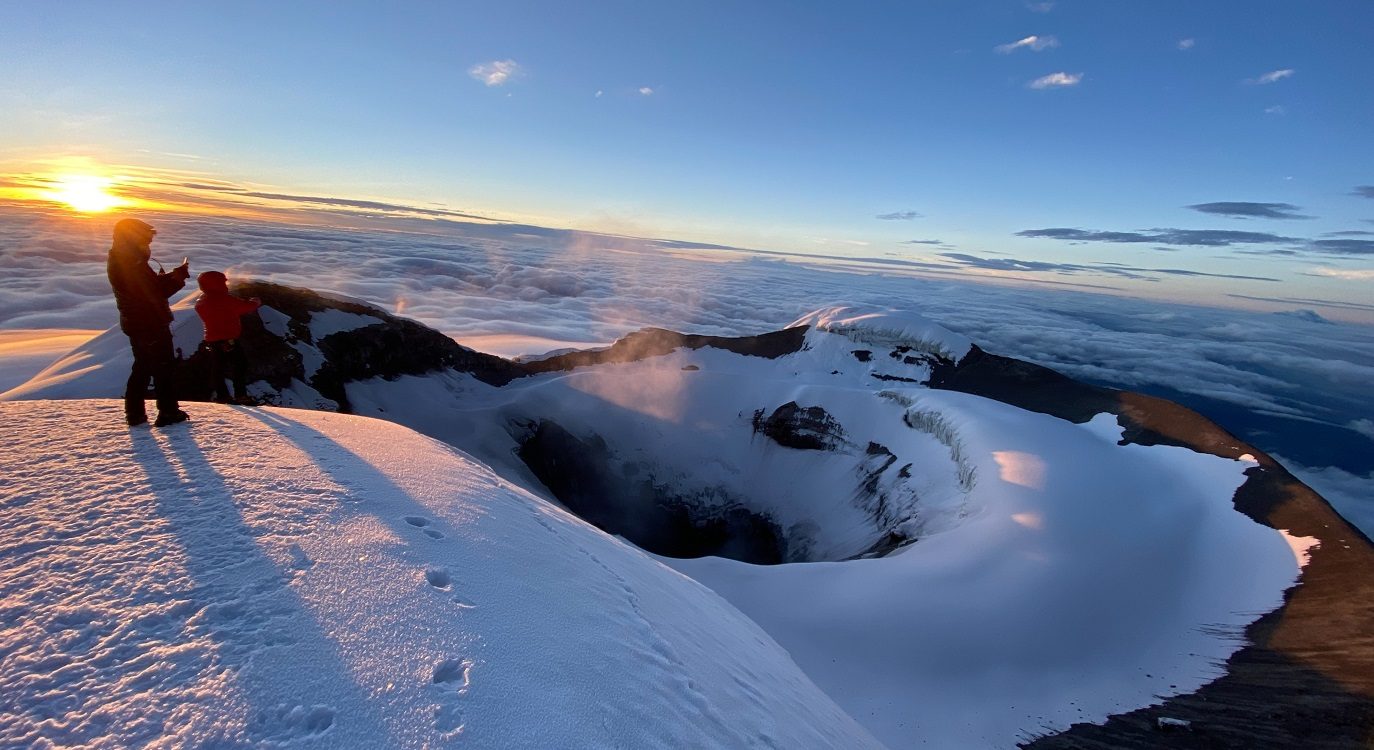
Cotopaxi volcano rises 5,897 meters above sea level, making it one of the world's highest active volcanoes and Ecuador's most climbed technical peak. The ascent crosses four distinct climate zones—páramo grassland, volcanic scree, permanent glacier, and the sulfurous summit crater—each imposing its own pace on climbers. The two-day structure exists because human physiology cannot safely ascend from 3,900 meters (the park entrance elevation) to nearly 6,000 meters in a single push. Day one serves a critical acclimatization function: climbers drive to the 4,500-meter parking lot, hike 45 minutes to an hour up loose volcanic sand to Refugio José Rivas, then rest in bunks through the afternoon and evening. This staged approach allows red blood cell production to catch up with oxygen demand. Attempting the volcano summit duration without this buffer increases altitude sickness risk substantially—headaches, nausea, and dangerous pulmonary edema become probable rather than possible. The midnight departure on day two follows mountain logic, not arbitrary tradition. Cotopaxi's glaciers soften under equatorial sun by 9 AM, turning stable névé into unstable slush where crampons lose purchase and crevasse bridges weaken. Climbers rope up in the dark, navigate the glacier's lower tongue by headlamp, and reach the steep upper slopes as dawn breaks around 5:30 AM. The final 300 vertical meters—a 40-degree ice wall below the crater rim—typically take 90 minutes of sustained front-pointing with ice axes. Summit arrival occurs between 6:30 and 8:30 AM for most parties, allowing two hours at the crater's edge before the weather window closes and afternoon storms roll in from the Amazon basin to the east. Physical fitness determines Cotopaxi climb length more than technical skill. The route requires only basic crampon technique and ice axe self-arrest, but it demands cardiovascular endurance equivalent to running a half-marathon at high altitude. Guides routinely turn back clients who cannot maintain the group's pace—lingering above 5,500 meters as clouds move in creates dangerous whiteout conditions where even GPS waypoints become unreliable. Weather shifts happen fast: clear skies at midnight can become zero-visibility snow squalls by 9 AM. The descent reverses the route but compresses the timeline. Gravity assists, though tired legs on steep ice require concentration. Most climbers reach the refuge by 10 AM, collect their overnight gear, and arrive at the parking lot by noon. Total door-to-door time from Quito—including the two-hour drive each direction—spans roughly 36 hours, though the actual climbing occupies only 12 of those hours. The rest is strategic waiting, allowing your body to adjust to an environment where each breath contains 40 percent less oxygen than sea level air.
“The midnight departure follows mountain logic: Cotopaxi's glaciers soften under equatorial sun by 9 AM, turning stable névé into unstable slush where crampons lose purchase.”
How Long Does It Take to Climb Cotopaxi: A Standard Ascent Itinerary
This itinerary outlines a standard summit attempt from José Ribas Refuge at 4,800 meters, suited for acclimatized climbers with technical glacier experience. The round trip typically takes 10–12 hours from refuge to summit and back.
Wake and Prepare at Refuge
Rise around midnight for a light breakfast and final gear check. Most guided groups depart between 00:00 and 01:00 to reach the summit by sunrise.
Begin Ascent to Glacier
Hike 45 minutes up scree slopes to the glacier edge at roughly 5,000 meters. Rope up and fit crampons before stepping onto ice.
Glacier Climb to Summit
Ascend steep snow and ice slopes with frequent switchbacks, gaining 900 vertical meters over 4–6 hours. Pace is slow and deliberate; rest steps and regulated breathing are essential.
Reach Summit at 5,897 m
Arrive at the crater rim near dawn, spending 10–20 minutes at the top. Weather permitting, views extend across the Avenue of Volcanoes.
Descend to Refuge
Descend the same route, taking 2–3 hours to return to José Ribas. Snow softens quickly after sunrise, so teams aim to be off the glacier by mid-morning.
Return to Parking Area
Pack gear at the refuge and drive or hike back down to the park parking area. Most climbers are back at the trailhead by late morning.
Best Time of Year and Day for How Long Does It Take to Climb Cotopaxi
The optimal time to climb Cotopaxi is during the drier months of December to January and June to August, when stable weather increases summit success rates. Regardless of the season, climbers must execute their summit push during the pre-dawn hours to mitigate the risks posed by daily weather shifts.
December–January
ModerateDry, cold, clear mornings; 0°C to 10°C
These months offer some of the most stable conditions for climbing. Visibility is generally higher, aiding navigation during the ascent.
June–August
ModerateDry, windy, clear; -5°C to 8°C
High pressure systems often create clear windows. Winds can be significant, so monitoring forecasts is necessary.
Weekday mornings
Low—
Arriving during the best arrival window of 08:00–10:00 is essential. Early starts avoid the intense afternoon cloud cover and precipitation that frequently obscure the peak.
Verdict: The best opportunity for a climb occurs during the dry months of June to August or December to January, starting the final ascent well before dawn to avoid afternoon weather volatility.
Preparation Checklist for How Long Does It Take to Climb Cotopaxi
Cotopaxi requires technical mountaineering gear, advanced fitness, and mandatory documentation at the gate.
-
Register passport or physical ID — Mandatory check at the park entrance gate before you begin.
-
Book a certified mountain guide weeks ahead — Solo summit attempts are prohibited; experienced guides navigate glaciers and crevasses safely.
-
Pack crampons, ice axe, and harness — Glacier travel above 4,800 meters demands full technical mountaineering equipment.
-
Train for 8–10 hour alpine exertion — The round-trip climb from parking lot to summit and back requires sustained high-altitude endurance.
-
Bring headlamp with extra batteries — Summit pushes begin between midnight and 2:00 AM in complete darkness.
-
Carry high-calorie snacks and 2–3 liters water — Energy and hydration drop fast at 5,800+ meters with no resupply points.
-
Wear layered insulation and waterproof shell — Temperatures range from freezing at the refugio to well below zero near the summit, with sudden wind and snow.
Opening Hours and Park Access to Facilitate How Long Does It Take to Climb Cotopaxi
Cotopaxi National Park maintains consistent gate hours throughout the week to manage climber access to the refuge and trailheads. Visitors should plan their arrival within the established morning window to ensure sufficient time for park activities.
| Monday | 08:00–15:00 | |
|---|---|---|
| Tuesday | 08:00–15:00 | |
| Wednesday | 08:00–15:00 | |
| Thursday | 08:00–15:00 | |
| Friday | 08:00–15:00 | |
| Saturday | 08:00–15:00 | |
| Sunday | 08:00–15:00 |
Getting to the Trailhead for How Long Does It Take to Climb Cotopaxi
Cotopaxi National Park is located in Cotopaxi Province, Ecuador, and is most easily accessed by traveling south from Quito via the Pan-American Highway (E35). From the highway, visitors turn toward the park entrance to reach the high-altitude parking area near the Jose Rivas Refuge.
Pan-American Highway (E35) south from Quito to park entrance
Private hire from Quito to park parking area
Public bus to Lasso, then private transport to park
Check availability
Frequently asked questions about how long does it take to climb cotopaxi
Everything you need to know about how long does it take to climb cotopaxi